Friday, 30 March 2012

Evaluation


Evaluation

In what ways does your media product use, develop or challenge forms and conventions of real media products?

For our opening sequence we used quite a lot of the conventions of horror so the audience would feel comfortable and familiar. For research we analysed the openings of horror films, we only had to do one in our group and then present it to the class. This meant we got the benefit of seeing more than one opening sequence and were able to spot conventions and perhaps see things that weren't often included that could make our film opening more unique.

Some of the conventions that we spotted and tried to use in our own film were:

· Night time/ darkness – We shot all our video in the dark as this was very common in horror films. It gives as sense of mystery because in the dark you don’t know what could be out there which is an uncomfortable feeling and hopefully makes the audience feel uncomfortable or worried.
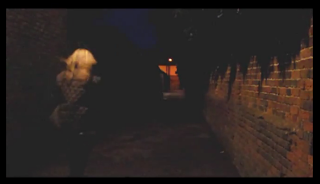

· Youthful/ attractive main characters – We used a young blonde girl as our main character. From our research we noticed a lot of films used young characters, in Friday the 13th (2009) and The Texas Chainsaw Massacre (2003) they use a whole group of young characters, I think this makes them a lot more vulnerable and immediately has the audience worried for them.

· Eerie/ Isolated location – During the scene of our

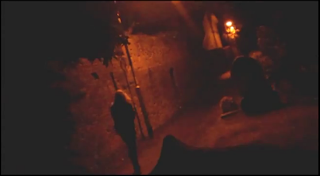
character walking we tried to use as many locations as possible that you could associate with horror or something bad. We including poorly light alleyways and a graveyard, we hoped this would give the audience the idea that something bad would happen but it was unknown when.


Something that we tried to avoid was a very gory and unrealistic death scene and we did include a death scene. We tried to show as little as possible but enough so the audience was clear on what happened. We only used a close-up after the character had been killed and whilst she was being killed we used a mid to long shot. We tried to avoid this convention, firstly, because with the resources available to use and the effects we could put on it wo

uld have made it difficult. Also it can look very unrealistic, which would have probably been the case if we’d have tried to do an elaborate death scene, and therefore put the audience off.

We wanted to be safe and for our film to be familiar to the audience so haven’t really challenged any of the typical conventions of the horror. This is because it could look quite bad or not make sense if we were to misjudge it. For example we used a graveyard as one of the locations in our film.
How does your media product represent a particular social group?

Our film only really featured young people, both girls and boys. We thought that our main audience and therefore our target audience was young people of both genders, possible 15 – 25 years of age. If we used the same sort of characters as the people that would be watching it would hopefully give them the idea that it is more likely to happen to them or they begin to like the characters featured more. This would mean they are more attached and maybe more scared.

We tried to make them behave and dress in a way that would cover the broadest group of people as possible. This meant at times the characters clothing was a bit plain and boring but we agreed that it wouldn’t be the most important thing and seeing as it would appeal to a wider audience it was fine like that.

We had a small amount of dialogue in our film and used the actor’s normal voices. This wasn’t a posh accent but wasn’t completely common. Meeting it halfway meant that a wider audience could relate to it to them characters.

Most of our film was filmed on the streets at the eerie locations I referred to earlier. However at the start in the party scene some was filmed at a house. We used an establishing shot so you could see the outside of the house and from this you can tell that the house is reasonably big but there are other similar houses around it so not completely upper calls and out of reach to some. You didn’t see much of the inside of the house as the party scene is in a marquee, so it was difficult to pass any judgements on the inside.

Summarising these points I’d say the main character and the other group of people in the film represent working class and middle class but the upper class could perhaps still relate to some aspects of it.

What kind of media institution might distribute your media product and why?

I think our film would be more suited for a Hollywood film company rather than an art house because we have tried to make it so it appeals and relates to as many groups of people as possible, not just on small specific group. Whilst researching film companies I was looking for one that made films similar to ours. I thought New Line Cinema would be the most appropriate. Horror films they have made include ‘Nightmare on Elm Street’, ‘Texas Chainsaw Massacre’, ‘Friday the 13th’ and ‘Final Destination. ‘Nightmare on Elm Street’ loosely relates to our film because the majority of our opening is the main characters dream and the idea of there being a murderer. We tried to avoid making our film similar to ‘Final Destination’ because we thought it can seem unrealistic and put the audience off, so the only way it relates is that both feature a young group of people. However ‘Friday the 13th’ is quite similar, like our film it has one murderer, hidden by a mask, who kills a group of young people. Although in our opening there is only one killing the story could go on to say that the murderer kills more people. ‘Texas Chainsaw Massacre’ is also similar to our film. Like ‘Friday the 13th’ there is one murderer who is sort of wearing a mask and kills a group of young people. Like the killer in our film he has an established weapon, the chainsaw, however our killer uses a knife. A difference between our film and this is that the killer has accomplices in ‘Texas Chainsaw Massacre’ whereas, as far as we know from the opening, ours doesn’t.

The audiences for New Line Cinema’s films can be seen as the same as ours and this is not just the horror films they make. This could be because it is most likely to be young people going to the cinema. Films such as ‘Wedding Crashers’, ‘Austin Powers’ and the horror films mentioned previously share the same type of audience as our film.

Seeing as New Line Cinema is an American film company a lot of their films would be set in America. Obviously we couldn’t have filmed ours in America but I still think this is the most appropriate film company because their films have a similar audience and their horror films a similar theme. The audience would expect to see similar things such as youthful characters and isolated locations.

Who would be the audience for your media product?

My target audience would firstly be male, I think the horror genre is more suited to male because of perhaps the gore or the violence. Also as our main character is a female it could be more suited to males. Their age would be 16 – 17, this is similar to the characters in our film and they could relate to them more as they would possibly act or do the same sort of things. The hobbies and interests of our target audience would include television/films, being with friends and going to parties. They would have to like films to watch one in the first place and in particular horror films. Our film features a party as we thought a lot of young people could relate to this and therefore feel more uncomfortable as a viewer because they could quite easily be in the same situation. They would most likely still be in education at a college or 6th form at that age. Most likely a public school rather than private school because they are probably going to be working class or middle class. As far as income it is likely at that age they would only have a part time job so their income would be small if they had a job at all.

We’ve tried to target this profile by featuring similar aspects in our film. For example the party at the start and all the characters are having a similar profile, except the killer. We choose this sort of audience because we thought they are the most likely to watch this type of film or most likely to go to the cinema and watch it. Also this quite a broad audience and therefore the film can be more successful.

How did you attract/address your audience?

The main way we have addressed our audience is by representing them with the characters in our film. This will attract them because they feel like they know the characters and become more attached to them. We also tried to use other things popular among our target audience such as what the characters are wearing and how they act. This is useful for a horror film because it will draw them into a false sense of security and be more engaged into the film

We haven’t done actual advertising for our film but I think viral advertising for our film would be perfect. Being able to put teasers and trailers on YouTube is good because our target audience would most likely be on YouTube. Social networking sites would be another great way of advertising our film. Our target audience would have a Facebook account so advertising on here in particular could really raise awareness of our film.

What have you learnt about technologies from the process of constructing this product?

Before the preliminary task I’d never really recorded anything properly, so the camera and filming was relatively new to me. We had learnt camera angles and movements in class however so I was able to apply that. We used HD flip cameras to do all of the filming for our film. They were easy to use and didn’t have any issues with them. For the editing we used Final Cut which is a programme foe a Mac. Some people in our group had better experience on a Mac and so did a lot of using the actual technology. I still contributed my thoughts but I didn’t use the technology as much as I would have perhaps liked.

The sound part of our film went quite well. We were able to use a piece of horror themed music that our friend had composed and it fitted our video very well. This also meant there was nothing to worry about as far as copyright. We used a few sound effects, such as a scream, that we got from the internet. This was very easy to put on our video and we had no issues with it. The reason we used a fake scream rather than getting our actor to scream was that it seemed a lot clearer and it was as if the scream was coming out of the whole room rather than just the actor’s mouth. This created a much better effect and created a much better atmosphere in our video.

We never had any major difficulties with the technology when creating our film, occasional something wasn’t quite how we wanted it when editing but this wasn’t really that much of a problem. The biggest problem was when we forgot one of the cameras but we were able to overcome this as the same cameras were available from the school library.

An advantage for us was the resources we were able to use when editing our film. We were able to use a good programme that was easy to use and gave us mostly everything that we wanted so our film could turn out as we imagined it. I feel quite lucky that we were able to use these resources pretty much whenever we needed them and they were very helpful. I am most proud of how our final product turned out after the editing, particularly the murder scene. Using the music and achieving affective camera angles, due to the tripod, meant we could create a lot of tension and therefore bettering our final product and drawing in our audience.

Looking back at your preliminary task what do you feel you have learnt in the progression from it to full product?

We didn’t integrate our preliminary task into to our actual film partly because our group had to be split up halfway between them both and also we felt we couldn’t develop the story of our preliminary task very much and it would be much easier to start from the beginning, which it was. The preliminary task taught us a lot that would help us with the main task. Firstly it was a good chance to practise camera angles, we could see what worked well and what didn’t. We learnt that we would need to manage our time better for filming are film and be more organised by giving out certain roles for each person, this meant we were less likely to forget equipment and everybody had something. With our preliminary task we didn’t edit it together which meant some people in the group didn’t see it for a long time and weren’t able to input their ideas. For our actual film we were together when we edited it so everybody contributed in some. Also it meant we came up with a lot more ideas which would benefit our final product. With our preliminary we tried to film too much at one time which led to issues with the light and equipment and we could therefore not get all the shots we wanted. With the main task we filmed on more separate occasions, although it was more time consuming we got a much better range of shots which gave us a lot more freedom when piecing it together. The most important thing we learnt from the preliminary task was that not everything would go as planned. We came across a number of problems during our preliminary but we were much more prepared for our main task and less went wrong and if it did we could deal with it easily.

Audience reaction to our film

We asked ask some people to watch our film and then asked them various questions about it. We filmed their reactions.
http://www.youtube.com/watch?v=NbVU67uZ6G4

Final Film

This our our final finished film:
http://www.youtube.com/watch?v=NbVU67uZ6G4

Wednesday, 8 February 2012

Preliminary Task Evaluation

What was your role?
In our preliminary task, we all helped to plan it and all of us contributed ideas that we could use. I suggested the idea of using a video tape or something similar as I thought it would perhaps make ours a little different to other peoples. When filming our prelim I didn’t do any of the acting, we wanted to use young girls as these were a convention of horror so I couldn’t do any of it. Instead I helped with the filming, the tracking shot of subject A walking down the stairs was filmed by my. This took a few takes because it was hard to keep the camera level and still whilst walking down. I also helped with the editing of the prelim, I did as much as I could but the software we used was new to me and I therefore couldn’t contribute as much as I would have liked.

What worked well?
I think that our location we used was very good. We filmed at the springs in Ashwell, which is a village near our school. It was isolated from anything else so in the video gave an effect that they were lost or it was just the two subjects alone, this added tension to the whole thing which is good for a horror film. Isolated locations are also a convention of horror that you see in a lot of films today. Our location was also very convenient because it wasn’t many people around so we could film quite easily and it was close to one of our group members houses so we had a place we could meet and get everything sorted out before we left. Another thing that worked well was the editing. We used iMovie which is a programme for the Mac. It enabled us to choose from lots of different transitions and we were able to get the ones we wanted in our film. It also had a big choice of sound effects that we could use. We used this feature a number of times including when subject A opens a gate at the start of the film. We added a door creaking to create more tension. This programme also let us adjust the brightness of the picture, this was useful because at some points n the film it seemed too dark to see what was happening.

What didn't work so well?
We wanted to film at night because this was a convention of horror, however our location had no street lights and was very dark. On our first day after filming the first couple of shot we realised it was too dark to see what was happening. We tried to use torches to brighten it up but this still didn’t work. We were able to edit the parts we’d already filmed so they seemed brighter but the rest of the filming had to be done on a different day, when it was lighter. This was slightly annoying as it was more time consuming but the next time we filmed it was lighter and we weren’t rushing to get all the shots we needed.

What will you do differently for your main task?
In our main task we will plan when we are filming and what we need to film more thoroughly to make sure we get everything done efficiently. Doing this will also mean we can plan all the equipment we need, this wasn’t a problem when film our prelim but it is easy to forget something one day.

Friday, 20 January 2012

Name: Robert N. Wilcock
Age: 17
Gender: Male
Robbie is currently at 6th from studying Maths, Product Design and BTEC sport. He plays football for Baldock Town, he is outgoing, very sociable and has a lot of free time. I think he fits the character for who I am aiming my horror film at.
The fact he is sociable and outgoing means he would be willing to go to the cinema with friends to watch films and therefore my horror film. He doesn’t have to pay any bills so would have spare money to go to the cinema.
The age of the target audience for my film is 15 – 25 and Robbie is 17 so would be suitable to watch it. Also at this age he would be able to relate to a lot that features in the film as the characters are a similar age.
Robbie enjoys horror films and in particular horror films with action in them. He doesn’t mind gore in horror films and likes them to have a bit of mystery in them. Although our opening lacks a lot of action, I think other than that he would enjoy it. Overall I think Robbie is the perfect mach to my target audience.

First Ideas and Story Board for mian task

A little while into planning our main task we found out that we had too many people in our group and would have to split. There were five of us but you were only aloud four. We decide that me and Dom would go into a group of two and the girls would stay together. We decided this because me and Dom were more likely to see each other and arrange things outside of school. We were also joined by Connor Thompson from the other class, this meant we could split the roles up better and work more efficiently.


The three of us came up with this as our idea for the main task:


To sum it up, a young girl leaves early from a party with her friends because she has had an argument. She walks home alone until she hears a scream, she follows the noise as she thinks somebody might be in trouble. She finds herself in a strange building were a masked man appears and kills her. She then wakes up in a panic to discover it was a dream and goes back to sleep. However once she has turned away the camera reveals the same masked man from the dream to be just outside her bedroom. The storyboard goes into more detail about camera angles and movement etc.

Wednesday, 18 January 2012

Preliminary Task

For our preliminary task we were given a rough storyline that we had to follow:


Subject A entering a room from a corridor and opening the door. Inside the room subject B is sitting down without saying anything, A gives a piece of paper to B. B reads it and reacts. A displays some kind of emotion and leaves. This task must demonstrate match on action, shot/reverse shot and the 180 degree rule.

Apart from this we had a lot of freedom to make what we wanted. We could do any genre but as we already knew our main task would be a horror film we choose to do this so we gained some experience and learned what could be done and what couldn't.


I worked in a group with Harri, Harri, Becky and Dom. This was our storyboard.


Location
In our group we discussed the conventional locations of horror films. We thought places like graveyards, forests/woods, old or abandoned houses in isolated locations are most common in horror. An abandoned house seemed difficult because we didn't have one and we ruled out graveyards because it was almost too stereotypical. We decided to film our prelim at the springs in a village near our school called Ashwell. This was in the middle of the village but when filming we could make it seem very isolated, which would give it a good effect and create more tension.


Time of day

When we discussed this in our group we decided that during the night would be best. It is the more conventional way for horror films as it gives the film a sense of unknown and can be quite scary. We thought doing it in daylight wouldn't be as effective.


Props

We had to use a package as one of the props in our prelim, so we decided to use an old tape as we thought it would give the clip more mystery and add to the tension. Apart from this we didn't use any other props because we tried to keep it simple.


Camera Angles/Movement
In the picture of our storyboard you can see the camera angles we plan to use. We've done a bit in camera angles in class and we tried to use the ones that will help to create tension and make the audience uncomfortable. For example we thought it would be good to use a canted angle shot at some point as it can make the audience feel a little disorientated, which would be ideal for our prelim.


This is a link to our finished preliminary task.
http://www.youtube.com/watch?feature=player_embedded&v=aCKQQ-baVt0


Monday, 16 January 2012

Production Companies - New Line Cinema


New Line Cinema is an American film company that was founded in 1967 by Robert Shaye and Michael Lynne as a film distributor. It became a subsidiary of Time Warner in 1996 and was merged with the larger studio Warner Bros in 2008.
Before it merged with Warner Bros, New Line Cinema produced successful films such as the 'Lord the of Rings' sequel. They've made horror/thriller films such as 'The Texas Chainsaw Massacre', 'Final Destination', 'Friday the 13th' and 'A Nightmare on Elm Street'. These films have similar story lines and aspects as to what we hope to achieve when we make our horror film opening. Therefore I think a company like this would be suitable for our film.


Production Companies - Universal Studios

Universal Studios was founded in 1912 by Carl Laemmle, it is currently the oldest American film still producing films. It is celebrating it's 100th anniversary this year.


Universal have produced popular films such as 'American Gangster', 'Role Models' and 'Hot Fuzz' and continue to produce other popular films. They've made many horror films including 'Frankenstein', 'Dracula' and 'The Mummy'. These horror films were some of the earliest made and have been remade multiple times, showing that they were also very popular. This could suggest that Universal had a big impact on today's horror films and influenced other production companies.

Production Companies - Paramount

Paramount Pictures is an American film production and distribution company. It was founded in 1912 by Adolph Zukor and is currently celebrating its 100th anniversary. Its America’s second oldest film company after Universal Studios and also the only major film company to still be located in Hollywood. It is a worldwide company and is continually ranked as one of the top grossing film companies.
Paramount has produced horror films such as ‘Psycho’, ‘Friday the 13th’, ‘Paranormal Activity’ and ‘The Haunting’. Films that are continually given positive feedback and regarded as some of the best in the genre.

Friday, 13 January 2012

Friday, 11 November 2011

Media Conference 2011

These are pictures from the conference I attended last week.


There were a number of speakers on the day, these included David Buckingham, Christine Bell, Pete Fraser and Garth Jennings.


David Buckingham is a Professer at the Institute of Education, University of London. He spoke about the riots that recently tok place all across the country and the 'experts' opinion on them.


Pete Fraser is a former Head of Media Studies and is a Senior Examiner for a major body. He spoke about we, the students, can the most out of our practical work.


Garth Jennings is a director. He spoke about different things he has directed, these included films, adverts and music videos.

Tuesday, 25 October 2011

Psycho (1960)


Psycho is a 1960 American horror/thriller film directed by Alfred Hitchcock and starring Janet Leigh and Anthony Perkins. The film is based on the screenplay by Joseph Stefano, who adapted it from the 1959 novel of the same name by Robert Bloch.

The film depicts the encounter between a secretary, Marion Crane, hiding at a secluded motel after embezzling money from her employer, and the motel's disturbed owner and manager, Norman Bates, and the aftermath of their encounter.

Marion Crane is a secretary from Phoenix fed up with the way life has treated her. She has to meet her lover Sam in lunch breaks and they cannot get married because Sam has to give most of his money away in alimony. One Friday Marion is trusted to bank $40,000 by her employer. Seeing the opportunity to take the money and start a new life, Marion leaves town and heads towards Sam's California store. Tired after the long drive and caught in a storm, she gets off the main highway and pulls into The Bates Motel. The motel is managed by a quiet young man called Norman who seems to be dominated by his mother.

Psycho initially received mixed reviews, but outstanding box office returns prompted a re-review which was overwhelmingly positive and led to four Academy Award nominations. Psycho is now considered one of Hitchcock's best films and is highly praised as a work of cinematic art by international critics. The film spawned two sequels, a prequel, a remake, and a television movie spin-off. In 1992, the film was selected to be preserved by The Library of Congress at The National Film Registry.

Monday, 24 October 2011

Alfred Hitchcock


Sir Alfred Joseph Hitchcock, (13 August 1899 – 29 April 1980) was a British film director and producer. He pioneered many techniques in the suspense and psychological thriller genres. His nicknames were ‘Hitch’ and ‘The Master of Suspense’.

Over a career spanning more than half a century, Hitchcock fashioned for himself a distinctive and recognisable directorial style. He pioneered the use of a camera made to move in a way that mimics a person's gaze, forcing viewers to engage in a form of voyeurism. He framed shots to maximise anxiety, fear, or empathy, and used innovative film editing.

He began his filmmaking career in 1919 illustrating title cards for silent films at Paramount's Famous Players-Lasky studio in London. There he learned scripting, editing and art direction, and rose to assistant director in 1922. That year he directed an unfinished film, No. 13 or Mrs. Peabody. His first completed film as director was The Pleasure Garden (1925), an Anglo-German production filmed in Munich. This experience, plus a stint at Germany’s UFA studios as an assistant director, helps account for the Expressionistic character of his films, both in their visual schemes and thematic concerns. The Lodger (1926), his breakthrough film, was a prototypical example of the classic Hitchcock plot: an innocent protagonist is falsely accused of a crime and becomes involved in a web of intrigue.

Friday, 14 October 2011

The Grudge Analysis- Daryls Presentation

The Grudge was made in 2004 and was directed by Takashi Shimizu. It is about an American nurse living and working in Tokyo who is exposed to a mysterious supernatural curse, one that locks a person in a powerful rage before claiming their life and spreading to another victim.

In the opening scene the house is overgrown with unwanted plants and weeds, this could be to represent the house being overfilled with life, because the grudge is living in this house. It also shows that the house hasn't had much caring and the person there is either unable or doesn't care.

There is a camera shot of the nurse coming down the stairs when she is exploring the house. It is a low angle shot which would usually make the subject seem intimidating but knowing that she is scared doesn't make her feel intimidating. Also in this shot as she walks down the stairs she is walking toward the camera, like she is walking toward the people watching, so we can feel the vulnerable state she is in. Finally in this shot the stairway is very narrow and as she walks down she blocks out the light from the window behind her. The fact that she blocks the light out herself could represent that she is taking herself into danger.

Tuesday, 11 October 2011

Discuss ways in which Terminator 2 constructs representation of gender using Camera Angles and Mise-en-scene

Terminator 2 was released in 1991 and was directed by James Cameron. It subverts the traditional conventions of the thriller or action genre, by having Sara Connor as the strong and heroine-like main character. It does this in a number of ways.
We first see Sarah Conner in her prison cell doing pull ups, we do not see her face straight away but a close up of her arm. We can immediately get a good idea of what her character is going to be like. It suggest she will strong and powerful, also your can hear that she is struggling or trying hard this could suggest she is gutsy and determined. In this shot the light from the window is shining directly on her arm, this could perhaps be to make it stand out more or to empathise how strong she actually is. The camera then jumps to long shot so we can see all of Sarah Connor and her cell. She has pushed her bed on its side so she can use it to exercise, this is another example of her strength and it could possibly suggest her intelligence, by being able to adapt to her cell. The camera then cuts to a close up of her face, however it is still difficult to see her face because the camera remains still and she continues to do pull ups. This could be another demonstration of her determination.
The light from the window in this scene is always shining directly on Sarah Connor, from all the camera angles. This could represent a number of things, firstly, that it is telling us who the main character is and how important she is. Also you often cooperate light shining on somebody with heaven and God as it is a bit like a halo. This could be a way of Cameron reinforcing the idea that she is very important.
Another way in which we can tell that Sarah Connor is not the ordinary women is this scene is by her clothes. When the camera cuts to a long shot of the whole room we can see she is wearing baggy trousers and a rest. Although in the film she would have to wear this, it has been chosen carefully. The fact that she is wearing a vest meant that we could see her arms and her muscles in the first shot. Also vests, particularly the style Sarah Connor is wearing, are more often seen on men in films, this could be a way of Cameron showing the audience that in this film Sarah Conner is the main action hero.
A scene that contradicts what this first scene represents comes not long after it. Whilst Sarah Connor is escaping she runs into The Terminator and her son. At first however she doesn’t see her son, John Connor, and is very scared of The Terminator. This is because in the previous film Arnold Schwarzenegger’s terminator was sent to try and kill her, however in this film he is trying to protect John Connor, at this point she does not know that though.
As Sarah Connor is running up the hallway, towards the elevator, The Terminator comes out from inside the elevator, it is a long shot so it is easier for the audience to see what is happening. At this point the camera goes into slow motion and the background noises become blurred and also slower. This could be symbolising how Sarah feels at this point, shocked, scared and surprised. The camera very briefly cuts to a close up of Sarah so we can also see this emotion in her face. Then it cuts back to The Terminator, however this time it is a close up of his face, properly reveals the identity of him as in the first shot it is not entirely clear. The camera is still in slow motion and cuts back to Sarah Conner where we see her sink to the floor. The editing of this scene cutting to and from each character very quickly contrasts with the slow motion of the camera. We then get a point of view shot from Sarah Connor and because she is on the floor it is a low angle shot of The Terminator. This shows him to be very powerful and authoritative especially as the next shot of Sarah Connor is a high angle shot. This makes her look vulnerable, which is the opposite from the first time we see her, as she is the one that is made to look powerful. This shows that she is not the only hero-like character in the film.
Towards the end of the film, when the T-1000 terminator believes he has defeated Arnold Schwarzenegger’s terminator, and he goes after Sarah and John Connor there is high angle shot of the T-1000 terminator. This would often display weakness and vulnerability, however in this shot it doesn’t. Sarah Connor and John Connor are at the top of the staircase looking down on him, but from his body language and the reaction of Sarah Connor we can tell he is the one with the power. This is very unusual and different to what this camera angle normally represents.
In the final scene where we see Arnold Schwarzenegger’s Terminator die, the authority which, except from the early scenes, has been equal between Sarah Connor and The Terminator, is returned to Sarah Connor. First we see a close up of a hand shake between the two of them to show that they are equal. This could be a way of Cameron showing that it doesn’t always have to be the male with power, and this is shown in a number of ways throughout the film. After this The Terminator gets a Hero’s death in comparison with the other Terminator as he is slowly lowered down into the lava. There is a high angle shot of him to show he can no longer do anything, even though he is dying at his own will. The shot of Sarah Connor and John Connor here is a low angle one, this shows she is still strong and powerful, and in John Connor’s case he now has more power than The Terminator for the first time because he is about to die.
Throughout the film Sarah Connor, the female hero in the film, is represented to be on a par with The Terminator or if not more powerful. This is unusual because in most other thriller and action movies there is a dominant male character. I think Cameron does this to use it as a unique twist to the film and makes it different to other action or thriller films.


We had to complete this essay to familiarise ourselves with analysing the mise-en-scene, camera angles, sound and editing.
I worked in a group with Dom Simmons, Ben Bowen and George Jackson to analyse the camera shots, mise en scene, editing and sound in the horror/thriller film The Silence of the Lambs.

Silence of the Lambs
· The silence of the lambs was the first horror movie to win an academy award for the best picture.
· Also has the distinction of being only the third movie in history to win the five major Oscars.
· It is an adaptation of Thomas Harris’s bestselling novel.
· The film was a deserved winner featuring superb performances from Jodie Foster who played the main role of Claurice Staling a young FBI agent, and Anthony Hopkins who plays the role of Hannibal Lector.
· It was directed by Jonathan Demme, previously best known for comedy but also had directed a few gore films.

Summary
· Claurice Staling is asked by her commander at the FBI, Jack Crawford, to visit the notorious serial killer Hannibal ‘the cannibal’ Lector a former psychiatrist held in a high security asylum/prison, who may have an insight into the case of a murderer named Buffalo Bill.
· The witty cultured Hannibal is too clever to give up such valuable information easily.
· He draws Claurice into an uneasy disturbing relationship in which he demands insight into her childhood in exchange for information on the case.
· They move Hannibal to a better facility but once there he manages a thrilling and physiological escape which involves the death of policemen and medics.
· Claurice eventually manages to discover the whereabouts of Buffalo Bill and resorts to killing him her and the lives of the girl and possible other girls.
· At the end Claurice is awarded with her full FBI status and gets a phone call from Hannibal telling her congratulations and that he won’t harm her but doesn’t plan to stop killing others.
· It is left with the camera panning out on Hannibal in a foreign country following a man who has done him wrong.

Wednesday, 5 October 2011

Camera Movements

Panning- When a camera is moved from side to side, this is known as panning. Here the lens scans the scene to provide the viewer with elements of a scene that can not be included in a wide angle shot. It can follow a moving object. Panning should be smooth. Adjusting the tension and and drag on your tripod head will insure a smooth pan

Tilt- The movemnet of the camera head up or down is called tilting. Tilting the camea up can show height and tilting it down can show depth. It can also show relationships, for example, the tilt of the camera from a man standing on a rocky ledge with a coiled rope on his shoulder to a man standing alone at the base of the cliff presents the situation.
Tilts can also generate emotional responses, tilting the camera upwards can cause feelings if rising interest, expectation, hope or anticipation. Tilting downward can lower interest and create feelings of disappointment or sadness.

Tracking Shot- A shot in which the camera is pushed horizontally along the ground on a dolly.

Dolly- Refers to a type of shot achieved when a camera rises above the ground on a mobile support.

Crane- A shot in which the camera rises above the ground on a mobile support.

Steadicam- Mechanism for steadying a hand-held camera, consisting of a shock-absorbing arm to which the camera is attached and a harness worn by the operator.

Hand-Held- When a person holds the camera in their hand whilst shooting.

Zoom- A single shot which moves towards a particular subject.

Reverse Zoom- A single shot which moves away from a particular subject.

Friday, 30 September 2011

Camera Angles and Shot Types

In this lesson we learnt about a number of shot types and camera movements, here are some examples and definitions.


Close up- This shows very little background, and concentrates on either a face, or a specific detail of mise en scène. Everything else is just a blur in the background. This shot shows the importance of things, be it words written on paper, or the expression on someone's face.


Extreme Close up- As its name suggests, an extreme version of the close up, generally magnifying beyond what the human eye would experience in reality. An extreme close-up of a face, for instance, would show only the mouth or eyes, with no background detail whatsoever.


Point of View- This show it what it says in the name really, it is taken from the point of view of one character. You can see what they would be seeing. The camera becomes the eyes of one particular character.


Over the Shoulder- Close-up of a character as seen over-the-shoulder of another person in the foreground.


Aerial Shot (bird's eye view) - This is a shot from directly above the head. The shot puts the audience in a godlike position, looking down on the action. it is also very good at setting the scene on a vast scale.


Extreme Long Shot - This can be taken from as much as a quarter of a mile away, and is generally used as a scene-setting, establishing shot.There will be very little detail visible in the shot, it's meant to give a general impression rather than specific information.


Long Shot- This one shows the entire body of the pers

on or people in the shot. it is quite hard to catergorise at times.


Medium Shot- Contains a figure from the knees/waist up and is normally used for dialogue scenes, or to show some detail of action.


High Angle- Not so extreme as a bird's eye view. The camera is elevated above the action using a crane to give a general overview. High angles make the object photographed seem smaller, and less significant (or scary).


Low Angle- These increase height and give a sense of speeded motion. Low angles help give a sense of confusion to a viewer, of powerlessness within the action of a scene.


Canted Angle- Sometimes the camera is tilted (ie is not placed horizontal to floor level), to suggest imbalance, transition and instability. It is popular in horror films.